

If you are a pilot, you likely know about noise cancelling headsets and why you would want to own one. However, do you know how they work?
Noise cancelling headsets, also known as ANR or active noise reduction have a built in microphone that identifies noise created by an external source, such as the noise generated by an aircraft engine and neutralizes it, and the resulting “sound” is silence. This little graphic helps illustrate.
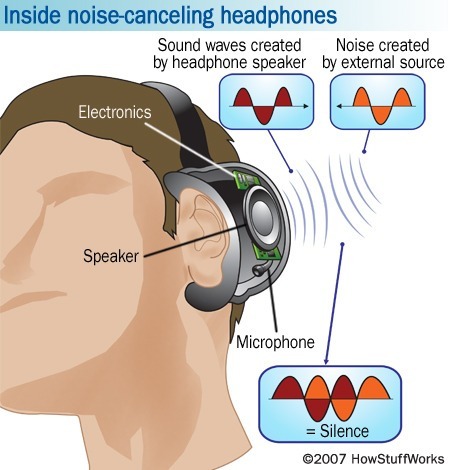
How noise cancelling headsets work. Image from Mashable.com
How they work
First, all attempts are made to comfortably block noise passively – this means using a good ear seal to block noise from entering your ears. A microphone placed inside the ear cup “listens” to external sounds that cannot be blocked passively. Then, noise cancelling circuitry (electronics) which are also placed in the ear cup, sense the input from the microphone and generate a unique fingerprint of the noise, noting the frequency and amplitude of the incoming wave. Then they create a new wave that is 180 degrees out of phase with the waves associated with the noise.
Next is the “speaker” phase. The “anti-sound” created by the noise-cancelling circuitry is fed into the headphones’ speakers along with the normal audio. The anti-sound erases the noise by destructive interference, but does not affect the desired sound waves in the normal audio. The term “active” refers to the fact that energy must be added to the system to produce the noise-cancelling effect. The source of that energy is a rechargeable battery.
Most headsets can reduce ambient noise by about 70%. However, they do more than just reduce noise – they reduce fatigue, which is incredibly important in flight training, cross country trips, and really to maximize comfort and mental alertness in any flight in a loud environment.
ANR headsets are available in the Powder Puff ANR headset, the Bose A20, The Sennheiser S1 Digital and the Lightspeed Zulu.