
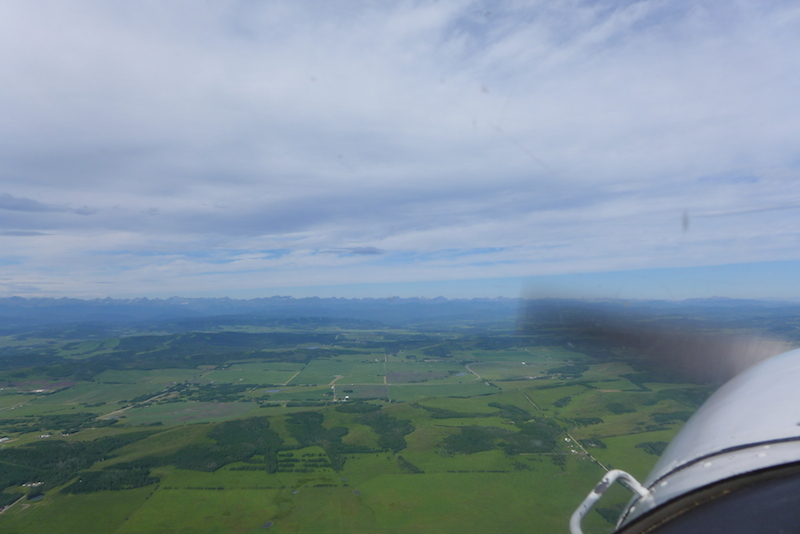

We all learn the very important procedure of forced approach. One of the most important parts of the procedure is choosing the field.
The video below shows that generally, there are three kinds of fields that you will have to choose from: dark brown, light brown and green. Do you know the characteristics of each that makes them a suitable or unsuitable landing spot?
For example, did you know that a green field with cattle grazing will mean that the surface will generally be smoother than if there was no cattle? Obviously the cattle will present an obstacle to be avoided, but an area on the same field with no cattle will likely be a good landing surface.
A dark brown field will often mean that the surface is usually freshly plowed, and will to too soft for landing, often causing your aircraft to flip. Your best bet is often a light brown field. Oh, and how about roads and dealing with obstacles such as power lines?
https://www.youtube.com/watch?v=2XX3Jd_gNrA
Once we have selected a field we must find a way of getting down to the ground. One of the most popular methods we are taught is the low key / high key procedure, though there are other methods.
The Smart Pilot website features many aviation safety related videos and are well worth a watch! We are happy to post their videos here too, so keep checking back for more.

Related Posts
 Understand how to use VOR and ADF Nav aids to orient yourself anytime
Understand how to use VOR and ADF Nav aids to orient yourself anytime
Nav aids like the VOR and ADF are there for you to use anytime you…

Alicja GadosJune 18, 2019
 Transport Canada modifies Flight Tests to assess stabilized approaches
Transport Canada modifies Flight Tests to assess stabilized approaches
The General Aviation Safety Campaign (GASC) was established in June 2017 and since has endeavoured…
Alicja GadosFebruary 15, 2019
 737 aborts midlanding in extreme wind
737 aborts midlanding in extreme wind
Tense moments leading up to a tricky approach and landing at Salzberg airport in Austria…
Alicja GadosNovember 1, 2017