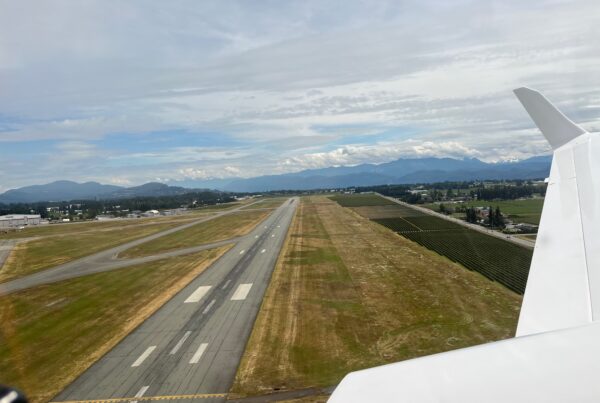
Before I learned precautionary and forced approaches, I learned about soft field landings. Here my account of the experience, and why soft fields are important and should be practiced regularly.
When will we use a soft field landing?
If we are planning to land on an unprepared surface. We also need to know the technique if we need to make a precautionary or forced landing, and have to put our airplane down in a field.
Like the short field procedure, the soft field is a lot of fun. It is used when taking off and/or landing on an unprepared surface. The can be a grass strip or turf runway, or a completely unprepared runway. One of the main goals is to protect your propeller and engine in the sequence. This means we try to keep it from being struck by flying debris and damaged, and to keep dirt and debris from being sucked into the engine. It also is to keep the nose gear from diving into a hole – since it is an unprepared surface there may be lots of surface irregularities. A small dip and we could wheelbarrow the plane. We keep the nose high throughout the procedure as long as we can.
It starts during the taxi

Can I land my airplane in that field, and what is the technique?
We fly in ground effect until we have built up enough airspeed to climb. This is about 60 knots, so when we reach 60 knots, we pull up and climb out. At 200′ AGL we announce that we have “two positive rates”
(1) altimeter increasing (showing a gain in altitude), and
2) vertical speed indicator increasing, and we retract the flaps and climb out normally at 70 knots.
Hold off on the landing
The airplanes POH will show us what speed to approach for our soft field landing. In the 172, we use 61 knots. The idea on the flare is try to hold off landing even longer than usual to keep the airplane nose high. So after we flare and we feel the first “sink”, we add a bit of power, around 100 RPM or so and try to keep the airplane from touching down. We do so until we have run out of altitude, and the airplane will touch down very softly. We keep the nose high to protect the propeller and keep from nose gear from running into rough terrain.
Soft field touch and go’s are probably the most fun of all – we do not push the nose down, and take off right away in a nose high attitude. That means we stay off the nose wheel and just do a “wheelie” down the runway, and take off! In my solo I managed to make this happen a few times.